
Overview of current UK mortgage rates
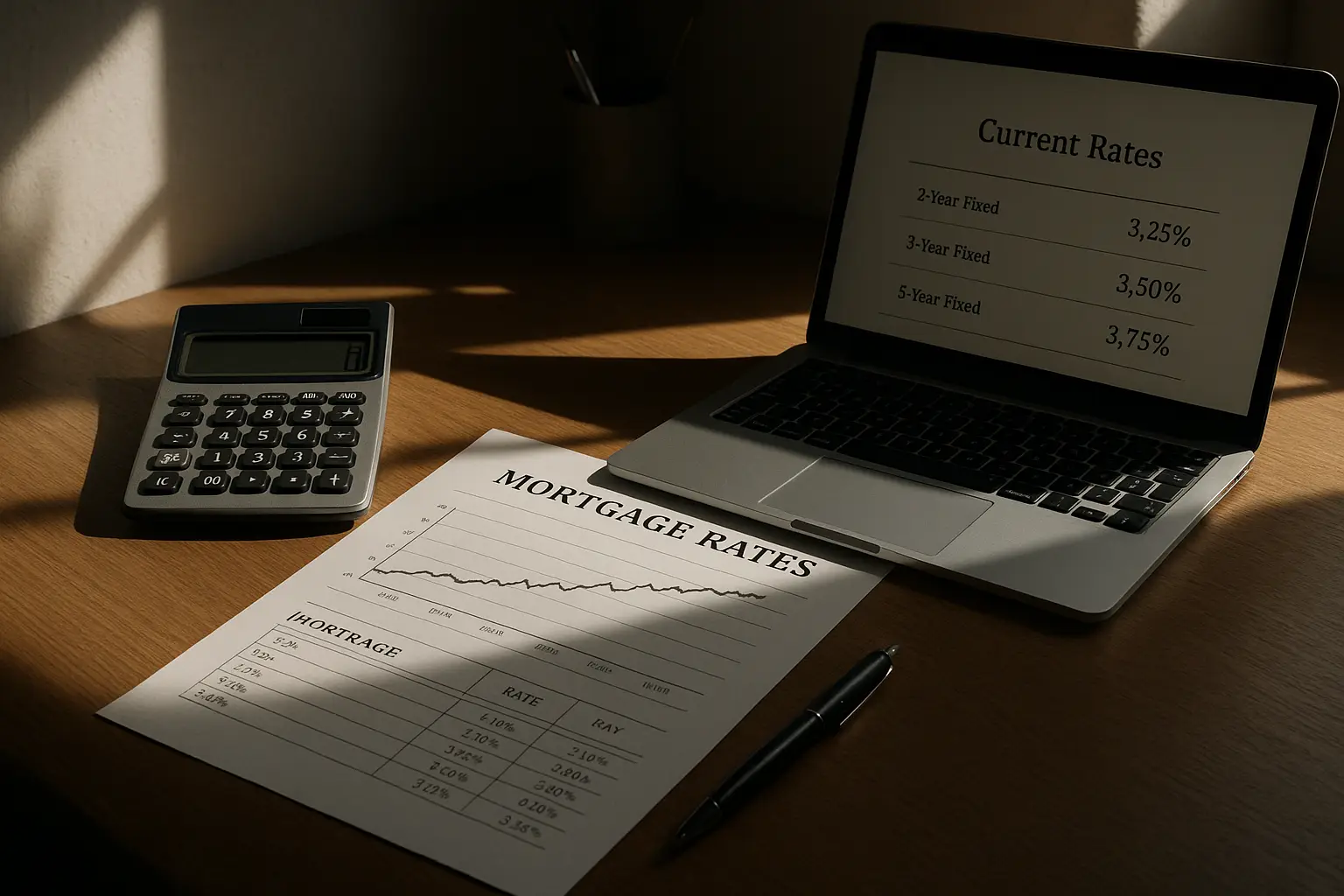
Current mortgage rates in the UK stand at an average of 4.23% for two-year fixed deals at 75% loan-to-value (LTV) ratio as of October 2025. This reflects a slight upward trend from earlier in the year, influenced by economic factors including the Bank of England base rate. Borrowers should note that rates vary by lender, deal type, and personal circumstances, making comparison essential for securing the best current mortgage rates.
Average rates by LTV
Loan-to-value (LTV) ratio, the percentage of the property value you borrow, significantly impacts current mortgage interest rates. Lower LTVs typically offer better rates due to reduced lender risk. For instance, at 60% LTV, the average five-year fixed rate is 4.12%, while at 90% LTV, it rises to around 4.8% for similar deals.
Key factors include deposit size and property value. First-time buyers with higher LTVs often face elevated current average mortgage rates uk, but schemes like Help to Buy can mitigate this.
Fixed versus variable breakdown
Fixed-rate mortgages lock in your interest for a set period, providing payment stability, whereas variable rates fluctuate with the base rate. Current fixed mortgage rates are preferable in uncertain times, with two-year fixes averaging 4.23% and five-year at 4.12%. Variable options, like trackers, hover at 5.49%, offering potential savings if rates fall but risk increases otherwise.
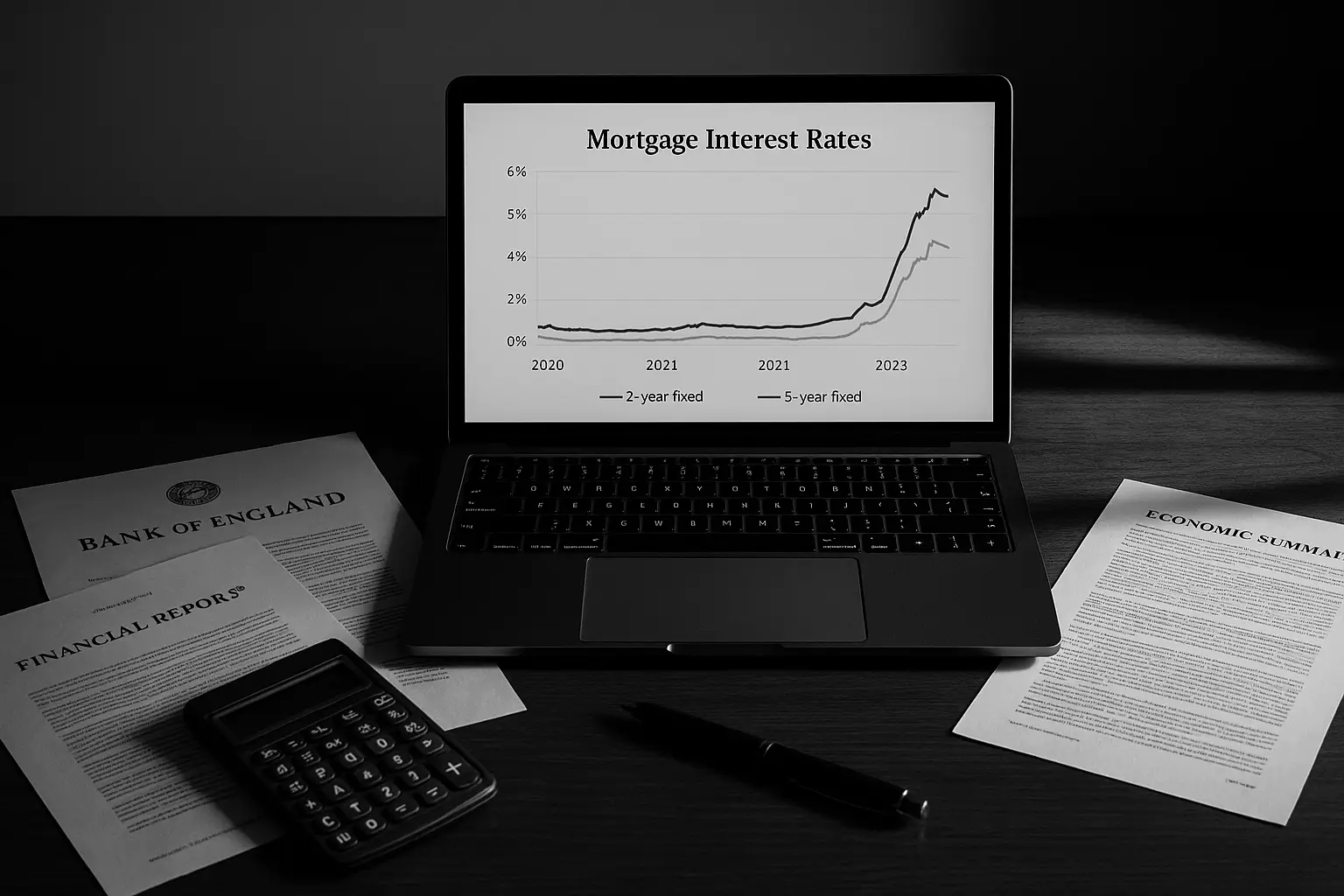
Recent changes show a modest climb to over 4.5% for some averages, driven by lender adjustments amid inflation concerns, as reported by MoneyWeek.
| Rate type | 60% LTV | 75% LTV | 90% LTV |
|---|---|---|---|
| 2-year fixed | 4.05% | 4.23% | 4.75% |
| 5-year fixed | 4.12% | 4.30% | 4.85% |
| Variable (tracker) | 5.20% | 5.49% | 5.70% |
Source: Adapted from Rightmove and Forbes Advisor UK data.
2025 mortgage rate predictions and trends
Experts predict current mortgage rates will stabilise around 4% for fixed deals by late 2025, potentially dropping further if the Bank of England implements base rate cuts. This outlook stems from improving economic indicators and anticipated market activity growth, as per UK Finance forecasts. However, persistent inflation could keep rates elevated, affecting borrowers planning for 2025.
Impact of base rate cuts
The Bank of England base rate directly influences current interest rates mortgage uk. A cut from the current 5% could lower variable rates quickly, while fixed deals might see gradual adjustments. Track trends using tools like a Uswitch market overview for timely insights.
Market activity is set to rise in 2025 due to stabilisation, encouraging more lending, according to UK Finance.
Rates from major UK lenders
Major lenders offer competitive current mortgage rates uk tailored to different needs. Halifax’s current fixed mortgage rates start at 4.10% for two-year deals, while NatWest and Nationwide provide options around 4.20% for similar terms. Santander and HSBC focus on variable rates, with trackers from 5.30%, often including cashback incentives.
| Lender | 2-year fixed | 5-year fixed | Fees |
|---|---|---|---|
| Halifax | 4.10% | 4.15% | £999 |
| NatWest | 4.18% | 4.25% | £795 |
| Nationwide | 4.20% | 4.22% | £1,019 |
| Santander | 4.25% | 4.30% | £949 |
| HSBC | 4.15% | 4.28% | £999 |
Rates approximate; check lender sites for updates.
- Compare fees alongside rates for total cost.
- Existing customers may access better current NatWest mortgage rates.
- Look for limited-time offers on best mortgage deals.
Specialized mortgage rates
Buy-to-let (BTL) mortgages carry higher current buy to let mortgage rates uk, averaging 4.8% for two-year fixes, due to investment risk. Commercial rates start at 5%, suited for business properties. First-time buyers face current first time buyer mortgage rates around 4.5%, with regional variations: London averages 4.3%, Scotland 4.1%.
For forecasts, see HomeOwners Alliance predictions.
Factors affecting mortgage rates
Economic influences like inflation and base rates drive changes in current UK mortgage rates. Your credit score determines eligibility for the best current mortgage rates, with excellent scores unlocking sub-4% deals. To compare, use online tools and consult advisors, avoiding high fees that erode savings.
Understanding these helps borrowers navigate 2025 trends effectively.
Frequently asked questions
Will mortgage rates fall in 2025?
Mortgage rates are expected to stabilise or slightly decline to around 4% by late 2025, contingent on Bank of England base rate cuts amid cooling inflation. This forecast from industry experts like HomeOwners Alliance suggests improved affordability for new buyers and remortgagers. However, global events could prolong higher rates, so monitor economic updates closely for timely decisions.
What are the average current mortgage rates in the UK?
The average current mortgage rates in the UK are approximately 4.23% for two-year fixed deals at 75% LTV and 4.12% for five-year fixes at 60% LTV as of October 2025. These figures, drawn from Rightmove and Forbes data, vary by lender and borrower profile. Beginners should factor in LTV and fees when assessing affordability against these benchmarks.
How do I find the best mortgage rates?
To find the best current mortgage rates, compare offers from multiple lenders using aggregator sites and brokers who access exclusive deals. Focus on total cost, including arrangement fees and early repayment charges, rather than headline rates alone. Expert strategy involves timing applications during rate drops and leveraging a strong credit score for discounts up to 0.5%.
What is the difference between fixed and variable rates?
Fixed rates, like current fixed mortgage rates at 4.1-4.3%, provide unchanging payments for 2-5 years, ideal for budgeting in volatile economies. Variable rates, such as trackers at 5.49%, adjust with the base rate, potentially lowering costs if rates fall but risking hikes. Beginners benefit from fixed for predictability, while experts might opt for variable to capitalise on anticipated cuts.
What affects current mortgage rates in the UK?
Current mortgage rates in the UK are primarily swayed by the Bank of England base rate, inflation, and lender competition. Global events and swap rates also play roles, influencing fixed deal pricing. For advanced borrowers, understanding LTV and credit score impacts can reveal opportunities for better terms amid these macroeconomic shifts.
Are mortgage rates going down in 2025?
Yes, mortgage rates are likely to trend downward in 2025 if base rate reductions materialise, potentially reaching 3.8-4% for competitive fixes. This aligns with UK Finance’s outlook on increased market activity fostering lower rates. Risks include persistent high inflation stalling progress, advising borrowers to prepare contingency plans like overpayments.