
Understanding child savings accounts in the UK
Child savings accounts help parents build financial security for their children from an early age. These accounts, often opened by parents or guardians, allow regular contributions that grow with interest, teaching kids about money management. In the UK, the most popular option is the Junior ISA, a tax-free savings vehicle for children under 18.
Types of accounts
The main types include Junior ISAs and regular children’s savings accounts. A Junior ISA comes in cash or stocks and shares versions, with tax-free growth up to the annual limit. Regular savings accounts, like those from high-street banks, offer easy access but may have variable interest rates and no tax benefits. For long-term goals such as college, a Junior ISA is ideal as it links to education savings.
Eligibility and age requirements
Children from birth up to 17 can have a savings account opened for them, but they must not already hold an adult ISA. Parents or legal guardians must be UK residents and have a National Insurance number. In regions like Jersey, eligibility follows similar rules but check local financial authorities for tax nuances.
Benefits and tax advantages
These accounts promote saving habits and provide compound interest over time. Junior ISAs are tax-free, meaning no income tax or capital gains tax on growth until the child turns 18. Over 1.2 million Junior ISAs were opened in the UK by 2024, with an average balance of £2,500 per child, according to GOV.UK. All qualifying accounts are protected by the Financial Services Compensation Scheme (FSCS) up to £85,000 per person per institution.
Choosing the right account provider
Selecting a provider depends on interest rates, fees, and ease of access. Focus on UK banks offering competitive AER (Annual Equivalent Rate, the standard interest measure) and FSCS protection. Compare options to find the best fit for how to open a savings account for your child.
Top UK banks and rates
Major providers include HSBC, NatWest, Barclays, and Halifax. HSBC’s MySavings account offers 2.5% AER variable interest for ages 0-17, with a minimum £1 deposit. NatWest’s First Saver provides 4.5% AER for under-16s, ideal for short-term saving. For specifics like how to open a child savings account at Halifax or Barclays, visit their sites for current rates, which can vary.
Comparison of features
Use this table to compare key providers based on 2025 data:
| Provider | Interest Rate (AER) | Minimum Deposit | Age Range | Key Features |
|---|---|---|---|---|
| HSBC MySavings | 2.5% variable | £1 | 0-17 | Online opening, FSCS protected |
| NatWest First Saver | 4.5% fixed (1 year) | £1 | Under 16 | No early withdrawal penalty |
| Barclays Children’s Savings | 2.0% variable | £1 | 0-18 | Easy access, app management |
| Halifax Kids’ Saver | 2.75% variable | £1 | 0-16 | Linked to parent account |
Rates are variable and subject to change; check providers for updates. For the best child savings account, consider your child’s age and saving goals.
Online vs branch options
Most banks allow online applications for how to open a savings account for a child online, which is faster and convenient. Branch visits suit those needing in-person advice, especially for Jersey residents where local rules apply. NatWest and HSBC support fully digital processes.
Required documents and preparation
Gather essentials before starting to ensure a smooth process for opening a child savings account.
Essential paperwork
You’ll need the child’s full birth certificate, your proof of identity (passport or driving licence), and proof of address (utility bill). A National Insurance number for the child helps if available, though not always required. For Junior ISAs, confirm no existing adult ISA via HMRC.
Parent/guardian role
As the account holder, you control contributions and withdrawals until the child is 18. Joint accounts with another guardian are possible. Involve older children to teach responsibility.
Child involvement
For kids over 11, some providers like NatWest encourage their input during setup, fostering financial literacy.
Step-by-step process to open an account
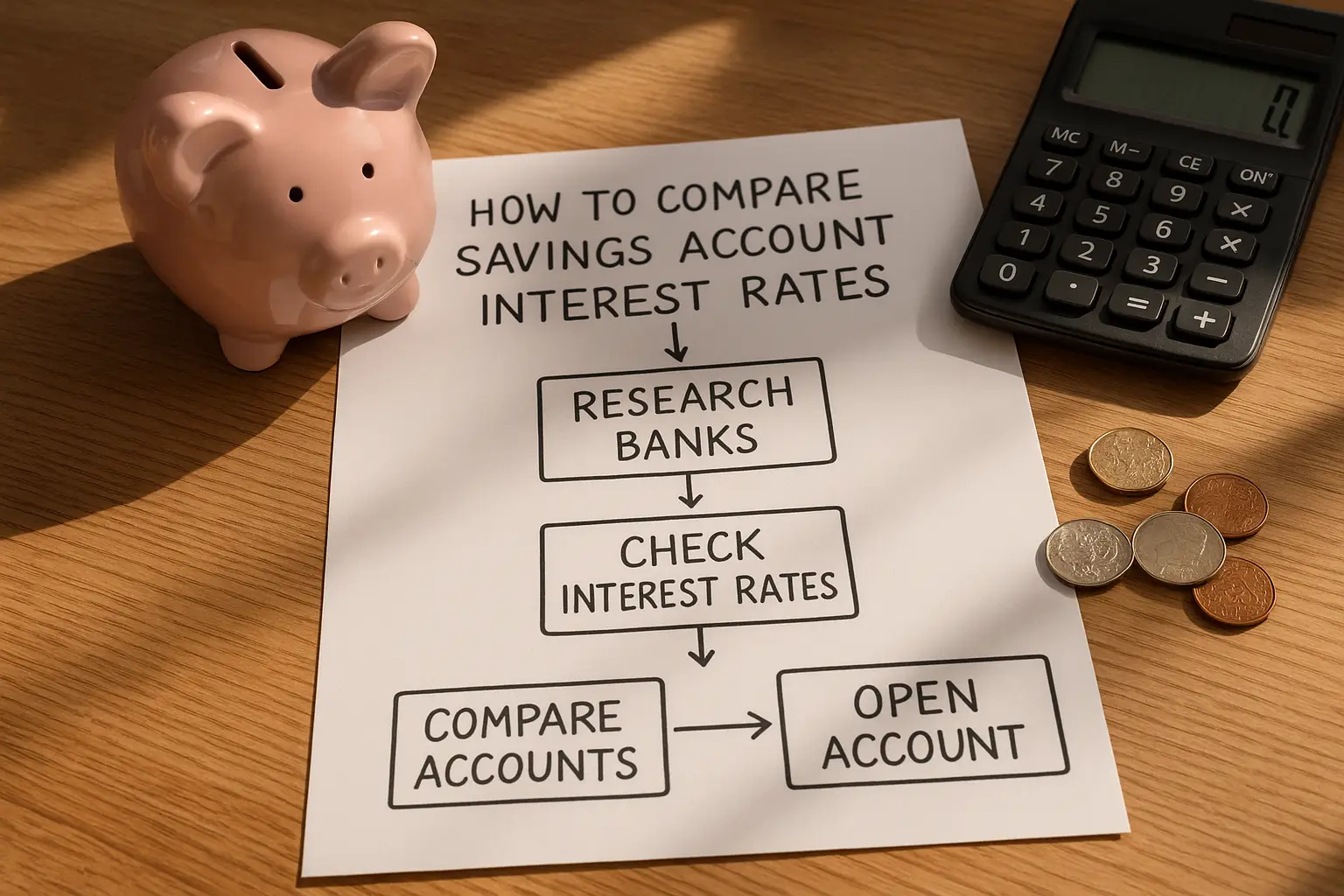
Opening an account takes 10-30 minutes online or a branch visit. Start by researching providers to match your needs for how to open up a savings account for a child.
- Research and select a provider: Use comparison sites like MoneySavingExpert to evaluate rates and features.
- Gather documents: Prepare birth certificate, ID, and address proof as outlined.
- Apply online or in person: For online, visit the bank’s site (e.g., HSBC or NatWest); enter details and upload scans. In-branch, book an appointment.
- Fund the account: Deposit at least the minimum (often £1) via transfer or card.
- Monitor and manage: Set up alerts and review statements annually.
For Jersey, consult local banks for any additional residency proofs. Detailed Junior ISA rules are on GOV.UK’s Junior ISA overview.
Common pitfalls and tips
Avoid exceeding ISA limits to prevent tax issues. Junior ISAs lock funds until 18, so choose access levels wisely.
Tax rules
Interest under £100 per child is tax-free without an ISA; over that, consider Junior ISA for full exemption. No tax on parental gifts.
Withdrawal restrictions
Regular accounts allow flexible access, but fixed-term ones like NatWest’s may penalise early withdrawals. Plan for emergencies.
Switching providers
Transfer ISAs via providers to maintain tax status; compare rates yearly for better returns.
For more on top children’s savings accounts, see MoneySavingExpert. HSBC details are at their MySavings page, and NatWest’s at First Saver.
Frequently asked questions
What documents do I need to open a child savings account?
To open a child savings account in the UK, parents typically require the child’s birth certificate to verify identity and age, along with their own proof of ID such as a passport or driving licence, and a recent utility bill for address confirmation. If the child has a National Insurance number, include it to streamline the process, though it’s not always mandatory for basic accounts. For Junior ISAs, additional checks ensure the child doesn’t hold an adult ISA, preventing eligibility issues. Always scan documents clearly for online applications to avoid delays.
Can I open a savings account for my child online?
Yes, most UK banks like HSBC and NatWest allow you to open a savings account for your child online, making it quick and accessible from home. The process involves filling out a form with personal details, uploading ID documents, and verifying your identity via app or email. This suits busy parents seeking convenience, often completing in under 15 minutes. However, for complex cases like joint guardianship, a branch visit might be needed for extra verification.
What is the best child savings account in the UK?
The best child savings account depends on your goals, but Junior ISAs from providers offering high AER like 4-5% stand out for tax-free growth up to £9,000 yearly. NatWest’s First Saver at 4.5% AER suits short-term savers, while HSBC’s variable rate option provides flexibility. Compare using sites like MoneySavingExpert for 2025 rates, focusing on FSCS protection and minimum deposits. Expert picks balance interest with access, avoiding lock-ins unless committed long-term.
How old does a child need to be for a savings account?
Children can have a savings account opened for them from birth in the UK, with no minimum age requirement as parents act as custodians. Accounts remain active until 18, when control transfers to the child for Junior ISAs. For involvement, kids over 11 can co-sign or learn via apps, promoting early financial education. Regional variations, like in Jersey, follow UK norms but confirm with local providers.
Are child savings accounts tax-free?
Junior ISAs are fully tax-free on interest and gains until age 18, ideal for how to open a college savings account for a child. Regular accounts have a £100 personal savings allowance per child, but exceeding it incurs tax—use ISAs to avoid this. Parental contributions are gifts, free from inheritance tax if under limits. With 1.2 million opened by 2024, they offer secure, efficient saving per GOV.UK guidelines.
How to open a child savings account at Halifax?
To open a child savings account at Halifax, start online via their website or app, providing the child’s details and your ID for verification. It requires a linked parent account, with a minimum £1 deposit and variable 2.75% AER for kids up to 16. The process takes minutes digitally, emphasising easy management. For branch support, especially in Jersey, contact them directly to handle any regional specifics.