What makes a savings account the best in 2025
The best savings account in 2025 balances high interest rates with accessibility, safety, and suitability for your financial goals. For UK savers seeking the best savings account, key priorities include the annual equivalent rate (AER, which shows the true return including compounding), FSCS protection up to £85,000 per person per institution, and flexibility like easy access without penalties. With the Bank of England base rate influencing variable rates, top easy access accounts currently offer up to 4.5% AER, while fixed-rate options lock in 4.55% for stability, according to recent data from MoneySavingExpert.
Key factors to consider
When choosing the best UK savings account, start with your needs: do you prioritise instant access or higher yields from fixed terms? Evaluate AER over headline rates, minimum deposits (often £1–£100), and withdrawal rules. Tax implications matter too—the Personal Savings Allowance lets basic-rate taxpayers earn £1,000 interest tax-free, as outlined by HMRC. Providers like Nationwide and Santander often lead for competitive rates and customer satisfaction.
Current UK interest rate landscape
UK savings rates in 2025 hover around 4–5% for top picks, driven by economic stability but subject to change. Easy access accounts suit short-term needs at up to 4.5% AER, while high-interest savings accounts from online providers like Chase or Marcus push yields higher. For the best savings account rates UK, compare via tools like Moneyfacts, where regular savers hit 7.5% AER for disciplined depositors limited to £250–£500 monthly.
FSCS protection and safety
All recommended best savings accounts are protected by the Financial Services Compensation Scheme (FSCS), safeguarding up to £85,000 if a provider fails, per the official FSCS guidelines. High-yield options from authorised UK banks are as safe as traditional ones, but always verify eligibility. Avoid non-FSCS accounts to ensure your money is secure.
Top easy access savings accounts
The standout easy access savings accounts in 2025 provide flexibility with competitive rates around 4.5% AER, ideal for emergency funds. Providers like Santander and Nationwide offer no-notice withdrawals, making them the best easy access savings account for most users. Switch easily via the Current Account Switch Service for bonuses up to £200.
Best rates and providers
Leading the best instant access savings account category, Trading 212’s account yields 4.5% AER with no minimum deposit, while Virgin Money’s Double Take pays monthly interest. For the best savings account UK, compare these against high street options like NatWest at 4.2% AER.
Pros and cons
- Pros: Immediate access to funds, variable rates that can rise, often no fees.
- Cons: Rates may drop with market changes, lower yields than fixed options, potential bonus caps.
How to switch
To find the best savings account to open right now, use comparison sites and transfer via BACS—most switches take seven days. Check for exit fees and confirm FSCS coverage.
Tip: Use a savings calculator to estimate earnings; for £10,000 at 4.5% AER, you could earn around £450 annually, tax-free within your allowance.
Best fixed-rate and notice savings accounts
Fixed-rate savings accounts guarantee returns like 4.55% AER for one year, perfect for those not needing quick access. Notice accounts require 30–95 days’ warning for withdrawals, offering a middle ground at up to 4.3% AER. These suit the best fixed rate savings account seekers aiming to beat inflation.
One-year fixed options
Top one-year bonds from Shawbrook Bank hit 4.55% AER with £1,000 minimum, per Which?. Ideal for lump sums, but early withdrawal incurs penalties.
Longer-term bonds
Two- to five-year terms yield 4.2–4.4% AER from providers like Close Brothers, locking in rates against potential cuts.
Notice account comparisons
| Provider | AER (%) | Notice Period | Min Deposit | FSCS Protected |
|---|---|---|---|---|
| Santander | 4.3 | 35 days | £500 | Yes |
| Nationwide | 4.2 | 95 days | £1 | Yes |
| Barclays | 4.1 | 30 days | £200 | Yes |
Note: Rates variable as of October 2025; always verify latest figures.
High-yield regular and monthly savings accounts
Regular savings accounts reward consistent deposits with up to 7.5% AER, the best regular savings account for building habits. Monthly interest payers like First Direct disburse earnings each month for reinvestment. Limit access to avoid penalties and maximise the best interest savings account benefits.
Top regular savers up to 7.5%
Martin Lewis highlights accounts from Co-operative Bank at 7.5% AER for £250 monthly max, as per MoneySavingExpert. Best for 12-month commitments.
Monthly interest payers
Options like Cynergy Bank’s 4.5% AER pay out monthly, aiding cash flow.
Eligibility for limited deposits
Require UK residency, often one per bank; withdrawals may reset rates or forfeit interest.
Best savings accounts for children and families
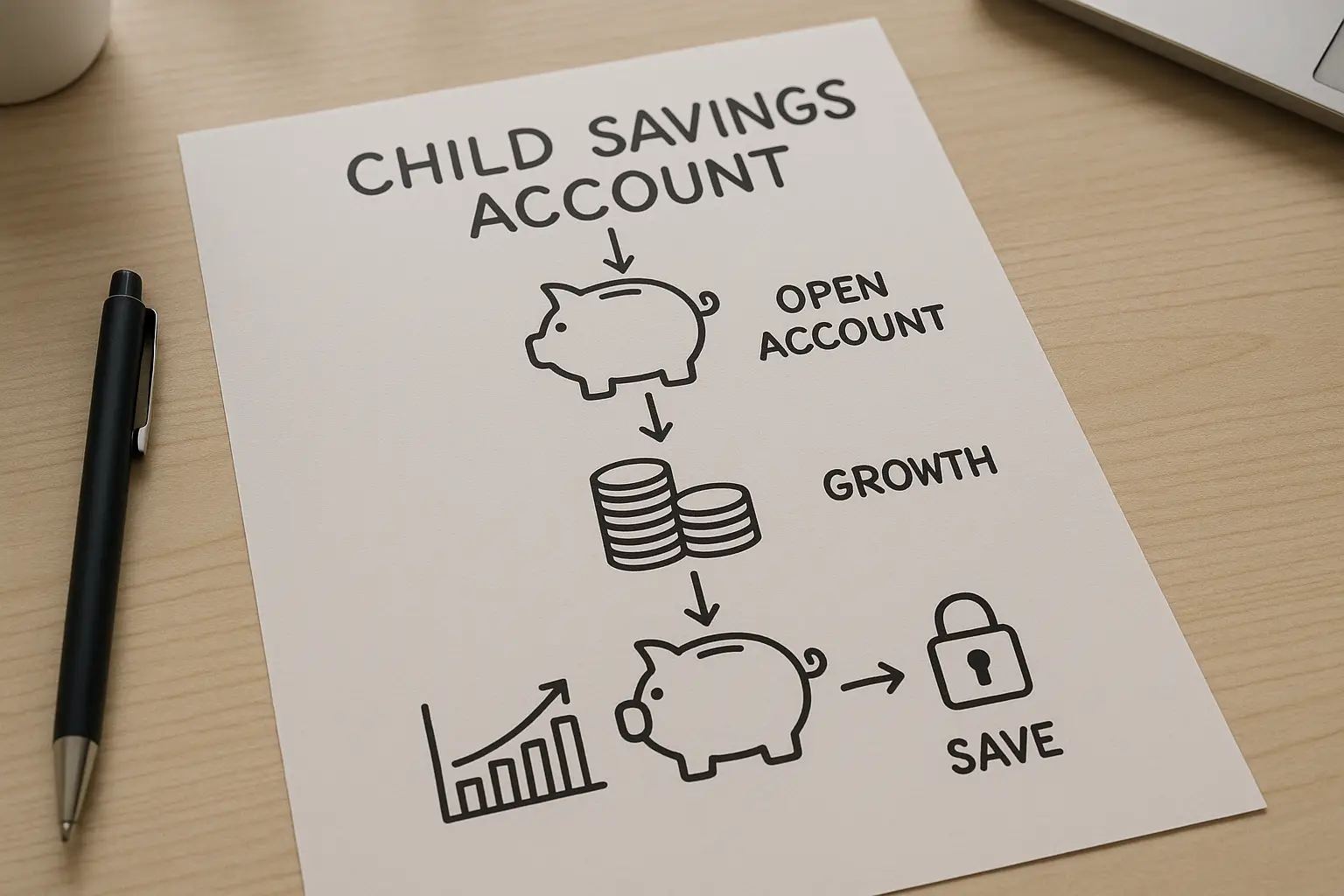
Family-focused accounts like junior ISAs offer tax-free growth up to £9,000 yearly, the best child savings account UK for long-term security. Joint accounts suit couples, while teen options build independence. For the best savings account for children, prioritise high rates with parental controls.
Junior ISAs and accounts
Providers like Coventry Building Society yield 4.5% AER; funds accessible at 18. See more on junior ISA options for details.
Joint and grandparent options
The best joint savings account from HSBC allows shared access at 4% AER, with FSCS covering £85,000 per person.
Accounts for teens
For 16-year-olds, NatWest’s FlexOne offers 3.5% AER with debit card perks.
Business and specialised savings accounts
Business savings accounts provide tailored rates up to 4.5% AER for companies, separate from personal funds. Online-only like Starling Bank excel for the best online savings account. Avoid pitfalls like unchecked fees by comparing via Money.co.uk.
Top business rates
The best business savings account from Metro Bank hits 4.4% AER, with easy transfers.
Online-only providers
Digital banks like Monzo offer app-based management at competitive yields.
Avoiding common pitfalls
- Verify tax on business interest differs from personal.
- Check withdrawal limits for cash flow needs.
- Use our savings growth tool to estimate earnings.
Frequently asked questions
What is the best savings account to open right now?
For immediate access and solid returns, the best savings account UK right now is an easy access option like Santander’s at 4.5% AER, protected by FSCS. It suits those needing liquidity without penalties, outperforming current accounts at near-zero interest. Consider your deposit size—many have no minimum—and switch quickly to capture bonus rates, but monitor for changes as markets fluctuate.
Which bank has the highest savings interest rate in the UK?
Nationwide often leads with up to 4.55% AER on fixed bonds, while online challengers like OakNorth push easy access to 4.5%, per Moneyfacts data. The best savings account rates depend on type: regular savers from First Direct reach 7.5% for small monthly inputs. Always compare eligibility, as high-street banks like Barclays may offer lower but more accessible rates for larger sums.
What is a good interest rate for a savings account?
A good interest rate exceeds inflation (around 2% in 2025), so 4%+ AER qualifies as strong for the best interest savings account. Variable rates like 4.5% on easy access beat the 1–2% from standard accounts, maximising earnings on £10,000 to £450 yearly. For fixed options, 4.55% locks in value, but assess against your timeline—higher rates often mean less flexibility.
Are high-yield savings accounts safe?
Yes, high-yield savings accounts in the UK are safe if FSCS-protected, covering up to £85,000 per institution against provider failure. The best high interest savings account UK from authorised banks like Chase carries no investment risk, unlike stocks. However, rates can vary, so diversify across providers to stay within limits and review annually for optimal yields.
How does tax affect savings interest?
Under the Personal Savings Allowance, basic-rate taxpayers enjoy £1,000 tax-free interest yearly, higher-rate get £500, per HMRC rules. For the best savings account interest rates exceeding this, consider ISAs to shield earnings. Non-residents or high earners may face immediate tax; track via Self Assessment to avoid surprises and maximise net returns.
What is the difference between easy access and fixed-rate savings accounts?
Easy access accounts allow anytime withdrawals with variable rates around 4.5% AER, suiting flexible needs like emergencies. Fixed-rate ones guarantee 4.55% AER for a term but penalise early access, ideal for committed savers. Choose easy access for liquidity despite potential rate drops, or fixed for predictability in the best fixed rate savings account scenario.