
What is a fixed rate ISA?
A fixed rate ISA is a type of cash individual savings account that locks your money away for a set period, offering a guaranteed interest rate in return. This means your savings grow at a predictable rate without the risk of rate drops, making it ideal for those seeking stability in a volatile market. Unlike variable rate options, the interest—quoted as AER (annual equivalent rate)—stays the same for the term, typically 1 to 5 years.
Fixed rate ISAs fall under the broader category of cash ISAs, which allow tax-free interest up to the annual £20,000 allowance for the 2025/26 tax year, as per GOV.UK guidelines. Over 11 million cash ISAs were held in the UK as of 2023, with fixed rate products gaining popularity for their security amid economic uncertainty, according to HMRC statistics. However, the trade-off is limited access to your funds during the term.
Eligibility and preparation for opening a fixed rate ISA
To open a fixed rate ISA, you must be aged 18 or over and a UK resident, as non-residents cannot subscribe to new ISAs under HMRC rules detailed on GOV.UK. This ensures the tax benefits apply only to those liable for UK taxes. Prepare by checking your total ISA subscriptions for the tax year do not exceed £20,000 across all ISA types.
Gather essential documents upfront to streamline the process: a valid photo ID like a passport or driving licence, proof of address (such as a utility bill from the last three months), and your National Insurance number. If transferring from another ISA, note the provider details and account number. Beginners should also review current rates, with top 1-year fixed rate ISAs offering up to 4.27% AER as of October 2025, per MoneySavingExpert.
The opening process step-by-step
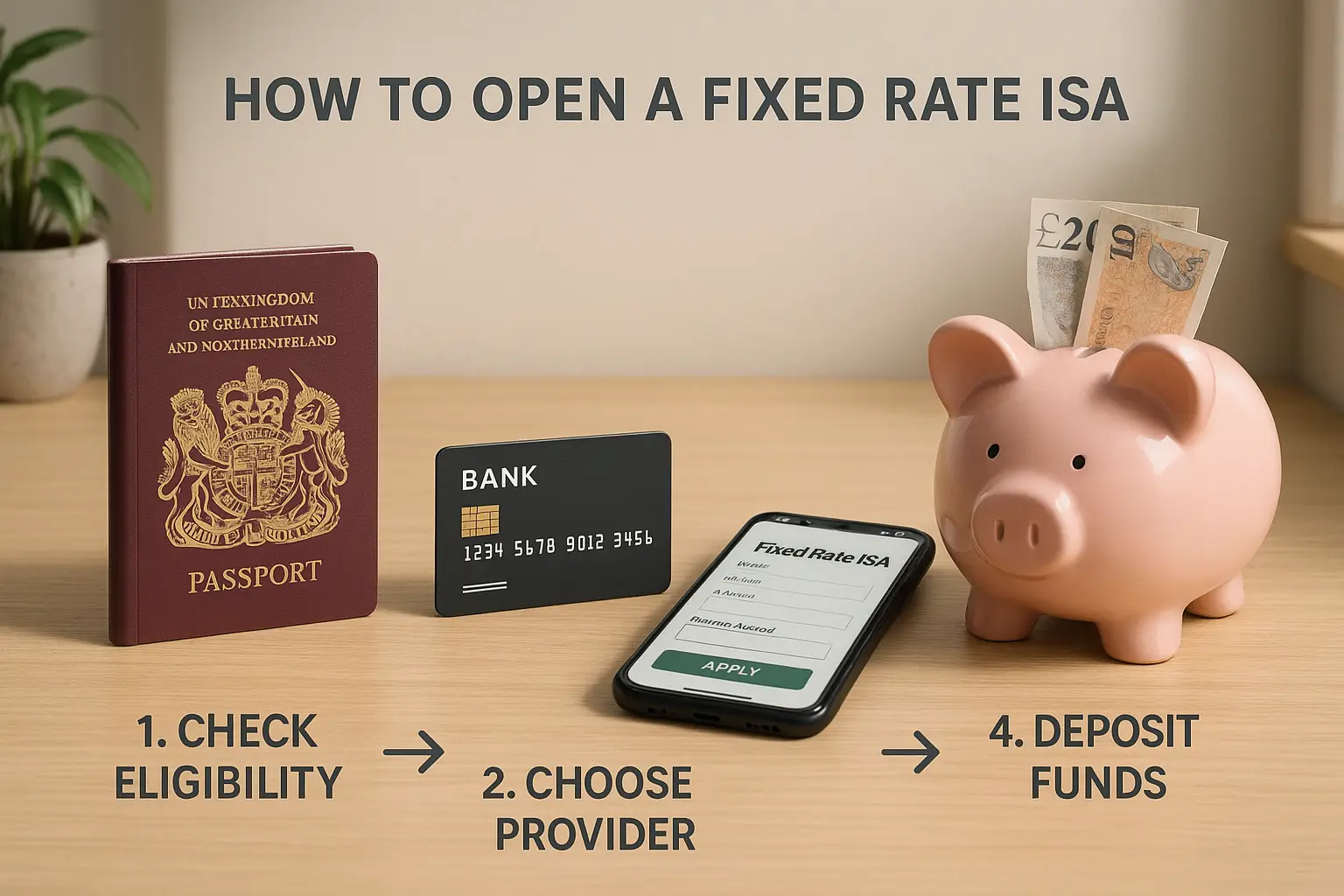
Opening a fixed rate ISA is straightforward and often takes just 10-15 minutes online for most providers. Start by selecting a term and rate that matches your savings goals, then apply through the provider’s secure portal.
Here are the key steps:
- Research and choose a provider: Compare options from banks like NatWest or building societies like Skipton. For instance, to open a NatWest fixed rate ISA, visit their site and select the term—online applications are available for UK residents.
- Check eligibility and prepare documents: Confirm you meet the 18+ and UK resident criteria, and have ID ready as outlined earlier.
- Complete the application: Fill out the online form with personal details, select the fixed rate product, and declare it’s within your £20,000 allowance. Providers like Santander offer digital applications for their 2-year fixed rate ISA.
- Fund the account: Transfer money from your current account or another ISA. Minimum deposits typically range from £500 to £1,000; use bank transfer or debit card.
- Confirm and receive documentation: Sign electronically, then get a welcome pack confirming the fixed rate and term start date. Monitor via app or online banking.
This process applies generally, but specifics vary—for example, Nationwide allows online openings for their fixed rate ISAs with quick verification. Always read the terms to understand penalties.
| Provider | Term | AER (%) | Min Deposit |
|---|---|---|---|
| HSBC | 1 year | 4.00 | £1,000 |
| NatWest | 1 year | 4.10 | £500 |
| Santander | 2 years | 3.80 | £500 |
| OakNorth | 1 year | 4.27 | £1,000 |
| Skipton | 3 years | 3.90 | £1,000 |
Rates are indicative and subject to change; check MoneySavingExpert for updates or explore the best fixed rate isa options for 2025. For current comparisons, see fixed rate isa rates.
Choosing a provider and managing your fixed rate ISA
Select providers authorised by the FCA, such as major banks like HSBC or NatWest, for security up to £85,000 via the Financial Services Compensation Scheme. Consider term length: shorter 1-year terms offer higher rates like 4.27% AER, while longer ones provide stability but lower yields.
After opening, your money is locked, but you can track interest accrual online. At maturity, funds transfer to an easy-access account unless you renew. To switch providers mid-term, use an ISA transfer to preserve tax-free status—contact your current provider to initiate.
Common pitfalls include exceeding the allowance or ignoring penalties, so plan deposits carefully.
Frequently asked questions
What is a fixed rate ISA?
A fixed rate ISA is a tax-free savings account where your interest rate is locked for a fixed period, usually 1 to 5 years, providing certainty on returns. It differs from easy-access ISAs by restricting withdrawals to encourage longer-term saving. Popular in the UK, these accounts help over 11 million Cash ISA holders shield earnings from tax, as per HMRC data, making them suitable for beginners building emergency funds without rate fluctuations.
How much can I put in a fixed rate ISA?
You can contribute up to £20,000 in total across all your ISAs for the 2025/26 tax year, including fixed rate cash ISAs, according to GOV.UK limits. This allowance resets each tax year on 6 April, so unused portions do not carry over. For beginners, starting with the minimum deposit—often £500—allows you to test the waters while maximising tax-free growth on larger sums like house deposits.
Can I withdraw from a fixed rate ISA early?
Early withdrawals from a fixed rate ISA are possible but usually incur a penalty, such as losing 90-150 days’ worth of interest, depending on the provider’s terms. This discourages access during the fixed term to maintain the guaranteed rate. If liquidity is key, consider easy-access alternatives; otherwise, plan for the full term to avoid reduced returns, as advised by Which? for risk management.
What are the best fixed rate ISAs in 2025?
The best fixed rate ISAs in 2025 offer competitive AERs like 4.27% for 1-year terms from providers such as OakNorth, based on October 2025 MoneySavingExpert scans. Factors to evaluate include term length, minimum deposit, and FSCS protection—compare across banks and building societies for your needs. For strategies, longer terms suit low-risk savers, but always verify current rates as they change with market conditions.
Do I need to be a UK resident to open an ISA?
Yes, you must be a UK resident and aged 18 or older to open a new ISA, including fixed rate types, under HMRC eligibility rules. Non-residents can hold existing ISAs but cannot add funds. This residency requirement ensures tax benefits align with UK tax liability; expats should consult GOV.UK for specifics before planning savings moves.
Can I open a fixed rate ISA online?
Most providers, including NatWest and Nationwide, allow you to open a fixed rate ISA entirely online via their websites or apps, often within minutes after uploading ID. This digital process suits beginners for its convenience, requiring just basic details and a bank transfer. For in-branch options, contact providers like Santander, but online is faster and increasingly standard in 2025.
How do fixed rate ISAs compare to easy access ISAs?
Fixed rate ISAs provide higher, guaranteed returns like 4.27% AER but lock funds, while easy access ISAs offer flexibility with lower variable rates around 4.51% but allow withdrawals anytime. Choose fixed for committed savings goals, such as retirement, to beat inflation securely. Beginners might start with easy access for liquidity, then shift to fixed as confidence grows, balancing risk and reward.