
Understanding mortgage interest: fixed vs variable rates explained
Mortgage interest rates determine how much you’ll pay on top of your loan for buying a home in the UK. Fixed rates offer stability by locking in the interest for a set period, while variable rates can fluctuate based on market conditions like the Bank of England base rate. In 2025, with rates hovering below 2022 peaks, understanding these options helps you choose wisely amid forecasts of potential cuts.
What are fixed-rate mortgages?
Fixed-rate mortgages keep your interest payments the same throughout the term, shielding you from rate changes. This predictability aids budgeting, especially for first-time buyers or those remortgaging.
How fixed rates work
The lender agrees to a constant interest rate, typically for two or five years. Your monthly payments stay unchanged, regardless of wider UK interest rates movements. For example, if you secure a 3.99% rate on a £200,000 loan, your interest portion remains fixed until the term ends.
Common terms and current averages
Popular terms include two-year and five-year fixes. As of October 2025, the average two-year fixed rate at 60% loan-to-value (LTV, the ratio of your loan to property value) stands at 3.99%, according to HomeOwners Alliance data. The best deals, like Santander’s 3.82% option, include fees but offer savings for those with strong credit.
What are variable-rate mortgages?
Variable-rate mortgages have interest that can rise or fall, often tied to the Bank of England base rate of 4% in 2025. They might start lower than fixed rates but carry uncertainty, suiting those comfortable with risk.
Types of variable rates
These include tracker mortgages, which follow the base rate plus a margin, and the standard variable rate (SVR), a lender’s default rate averaging 7.21% in January 2025 per Forbes Advisor UK. Some have collars or floors, limiting extreme changes—collars cap rises, floors prevent drops below a minimum.
Link to Bank of England base rate and potential changes
The base rate influences trackers directly; a cut lowers your payments, but hikes increase them. With 2025 forecasts suggesting stability or further reductions, variable rates could appeal if you anticipate drops. However, many revert to high SVRs post-term, impacting budgets.
Fixed vs variable: pros and cons
Fixed rates provide peace of mind with set costs, ideal in uncertain times, while variable rates offer potential savings if rates fall but expose you to increases. In 2025, fixed options often edge out variables for most due to current stability.
Stability vs flexibility
- Fixed pros: Predictable payments, easier long-term planning; cons: Higher initial rates, penalties for early exit.
- Variable pros: Possible lower starts, overpayments without fees; cons: Unpredictable costs, risk of hikes.
Cost comparisons in 2025
Fixed rates average lower than SVRs, but trackers might undercut short-term. For a £250,000 mortgage over 25 years, a 3.99% fixed yields about £1,300 monthly, versus a variable at 5% hitting £1,450 if rates rise.
| Type | 2-year term | 5-year term | SVR |
|---|---|---|---|
| Fixed | 3.99% | 4.25% | N/A |
| Variable (tracker) | 4.50% | N/A | 7.21% |
Source: Adapted from Rightmove and HomeOwners Alliance, October 2025.
Risks during rate hikes
Variable mortgages amplify risks; post-2022 surges saw payments jump 30%. With 446,000 fixed deals expiring in Q4 2025 (The Independent), many face higher variable rates without action.
Factors influencing mortgage rates
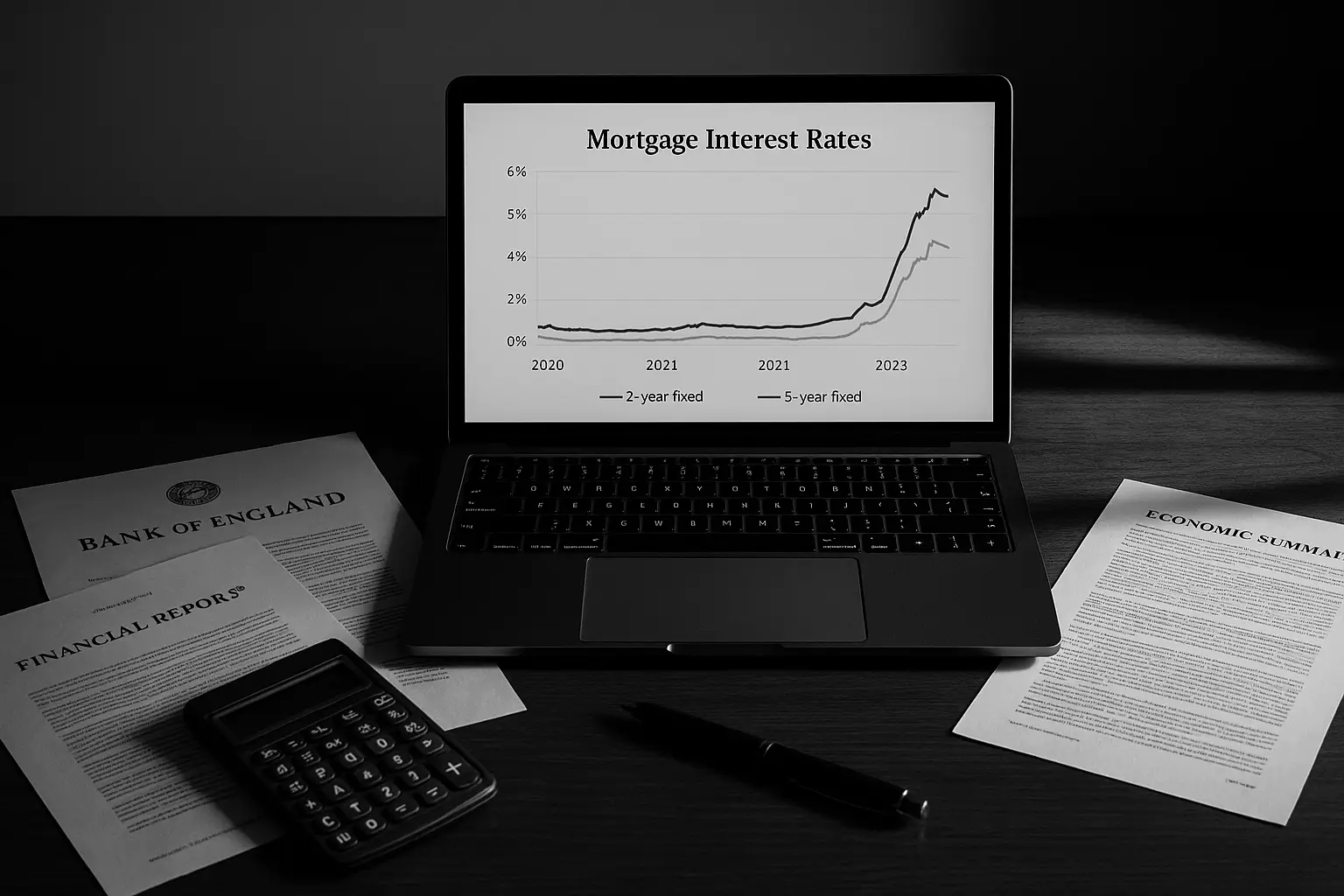
Mortgage interest rates uk are shaped by economic policies, your finances, and history. The Bank of England base rate drives changes, with 2025 declines keeping averages below peaks (Statista).
BoE decisions and forecasts
At 4%, the base rate follows 2024 cuts. Forecasts predict steady or lower rates, benefiting variables. Check HomeOwners Alliance predictions for updates.
LTV, credit, and historical trends
Lower LTV (e.g., 60%) unlocks better rates. Good credit helps too. Historically, rates peaked in 2022 but eased in 2025, per Mortgageable.
When to choose fixed or variable
Opt for fixed if seeking certainty, like families budgeting tightly. Variable suits optimists betting on rate falls, per MoneyHelper guidance.
For first-time buyers and remortgaging
First-timers often pick two-year fixes for entry-level stability. Remortgagers in 2025, facing expiries, should lock fixed to avoid SVR jumps. Long-term planners favour five-year terms.
How to calculate mortgage interest
Interest accrues on your outstanding balance, often compounded monthly, inflating costs over time. Use simple interest for basics: principal times rate times time.
Simple vs compound and online tools
Compound interest builds on prior interest, common in mortgages. For a £200,000 loan at 4%, compound adds £8,000 yearly versus simple’s £8,000 flat. Try an mortgage rates calculator for simulations; compare with mortgage interest tools.
Tax considerations
Mortgage interest isn’t tax-deductible for homeowners, unlike buy-to-let. For broader finance, note tax on savings interest via personal allowance.
Frequently asked questions
What is the difference between fixed and variable mortgage rates?
Fixed rates lock your interest for a term like two years, ensuring unchanged payments despite market shifts. Variable rates, such as trackers, adjust with the Bank of England base rate, potentially lowering costs if rates drop but raising them during hikes. This core difference affects budgeting; fixed suits predictability, variable offers flexibility in falling rate environments like 2025 forecasts.
When should I choose a fixed rate mortgage UK?
Choose fixed if you value stable payments, especially as a first-time buyer or remortgager amid 2025 expiries. With averages at 3.99%, it’s ideal when UK interest rates seem volatile. Experts from MoneyHelper recommend it for those unable to handle payment surprises, balancing long-term planning with current low fixed offers.
Are variable rates cheaper than fixed in 2025?
Variable rates can start lower than fixed but often revert to higher SVRs like 7.21%. In 2025, trackers around 4.50% might undercut fixed 3.99% initially, per Forbes data, if base rate cuts continue. However, risks of rises make them less reliable; assess via calculators for your scenario.
How do Bank of England rates affect mortgages?
The base rate at 4% sets the benchmark; trackers follow it directly, while fixed rates indirectly reflect expectations. Cuts lower variable payments quickly, benefiting borrowers, as seen post-2024. For fixed holders, it influences renewal rates; monitor decisions for timing remortgages.
What are the risks of variable mortgages?
Main risks include sudden payment hikes if rates rise, straining budgets—up 30% in 2022. Without collars, exposure is full; SVR reversion post-term hits hard at 7.21%. Mitigate by choosing capped deals and building buffers, especially with 446,000 expiries looming in 2025.
How does compound interest impact mortgage costs?
Compound interest calculates on principal plus accrued interest, increasing total payments over time versus simple interest. For a 25-year mortgage at 4%, it adds thousands extra annually. Use online interest calculators to model; understanding this aids choosing terms to minimise long-term outlay.
This guide empowers informed decisions on mortgage interest. Consult a broker for personalised advice, as rates change.