
What is a child ISA?
A Child ISA, also known as a Junior ISA or JISA, is a tax-free savings or investment account designed specifically for children under 18 in the UK. It allows parents or guardians to save on behalf of their child, with funds locked until the child reaches 18, when they gain full control. There are two main types: cash JISAs, which work like savings accounts earning interest, and stocks and shares JISAs, which invest in markets for potentially higher returns but with more risk.
Eligibility is straightforward: the child must be under 18 and a UK resident, and only one JISA provider can be used per tax year. The annual allowance for 2025/26 is £9,000, all growth tax-free, as per official HMRC regulations on GOV.UK. Tax benefits make it ideal for long-term family savings, shielding interest or gains from income tax and capital gains tax.
What is a regular savings account for children?
A regular savings account for children is a flexible bank account where parents or guardians deposit money for their child, typically earning interest without tax wrappers. These accounts are easy to open and allow instant access to funds, making them suitable for short-term needs like pocket money or emergencies. Interest rates are competitive, but any earnings over £1,000 in a child’s name could be taxable if linked to parental contributions exceeding £3,000 annually.
Key features include FSCS protection up to £85,000 per account, no age lock-in, and options for regular deposits to build saving habits. For instance, many offer around 4-5% AER in 2025, though taxable for higher earners. Tax considerations hinge on HMRC rules: interest is usually tax-free for children due to low thresholds, but in child ISA vs savings account comparisons, the ISA edges out for larger sums.
Tip for parents: Start small with regular deposits to teach financial responsibility, but consider tax implications for active savings account vs child ISA choices.
Key differences between child ISA and regular savings
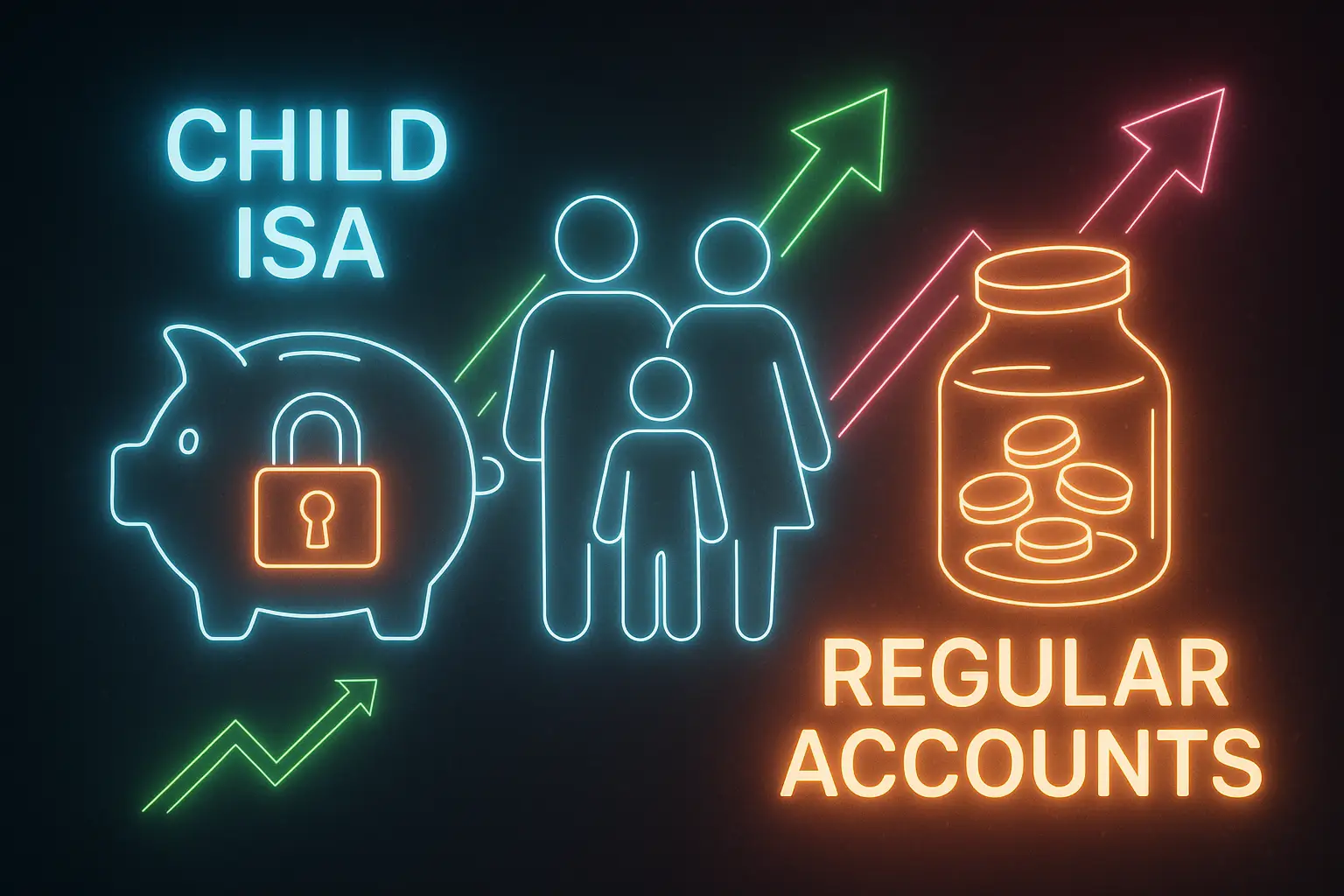
The core difference in child ISA vs savings account lies in tax efficiency and access: JISAs grow tax-free up to £9,000 yearly, while regular accounts may face tax on interest for bigger balances. Over 1.2 million JISAs hold £12.5 billion as of September 2025, per GOV.UK statistics, highlighting their popularity for long-term growth.
Tax efficiency
JISAs are fully tax-free, meaning no income tax on interest or capital gains tax on investments. Regular child savings accounts are simpler but taxable if the child’s total interest exceeds £100 annually, or if parents gift over £3,000, potentially pulling it into parental tax brackets. This makes child ISA vs active savings account a clear win for tax savings on substantial deposits.
Access and flexibility
Regular savings allow withdrawals anytime, ideal for flexible needs, whereas JISAs lock funds until 18, as noted in Which? guides. In active savings account vs child ISA scenarios, choose regular for short-term access.
Growth potential
Top JISAs offer 4.51% AER in 2025 cash options, per Moneyfacts, compared to similar rates on regular accounts but without tax protection. Contributing £100 monthly at 4% in a JISA could reach £28,000 by age 18, tax-free, versus less in taxable savings, according to OneFamily projections.
| Feature | Child ISA | Regular Savings |
|---|---|---|
| Annual Limit | £9,000 | No limit |
| Interest Rate (AER) | Up to 4.51% | 4-5% |
| Tax-Free? | Yes | Usually, but taxable over thresholds |
| Withdrawals | Locked until 18 | Anytime |
| FSCS Protection | Up to £85,000 | Up to £85,000 |
Pros and cons for family planning
For families, a Child ISA excels in building a tax-free nest egg for education or a first home, but lacks flexibility. Regular savings offer easy access for immediate needs like school trips. In child ISA vs savings account decisions, combine both: use regular for short-term and ISA for long-term.
When to choose ISA
Opt for JISA if saving £50+ monthly long-term, leveraging compound interest without tax drag.
When to choose regular savings
Ideal for under 5 years’ horizon or if needing funds for family emergencies.
Combining both
Many families split contributions; learn more about the best child savings account options. See how to open a child savings account and explore benefits of child savings accounts.
- Short-term goals: Prioritise regular savings flexibility.
- Long-term growth: Choose child ISA for tax advantages.
- Hybrid approach: Use both to balance access and efficiency.
This is not financial advice; consult a professional for your situation. Rates and rules can change; check current details on Forbes Advisor UK.
Frequently asked questions
What is the difference between a Junior ISA and a regular savings account?
The main difference in child ISA vs savings account is that Junior ISAs offer tax-free growth up to £9,000 annually, locked until age 18, while regular savings provide flexible access but potential tax on interest over £100 per child. JISAs suit long-term family planning, as seen in HMRC data showing £12.5 billion in assets, whereas regular accounts are better for short-term needs with rates around 4-5% AER. Parents should weigh tax efficiency against liquidity based on their child’s age and savings goals.
Can I withdraw money from a Child ISA before 18?
Generally, no—you cannot withdraw from a Child ISA before age 18 without closing the account, which forfeits future tax benefits and may incur penalties. Exceptions are rare, like terminal illness, but standard rules lock funds to encourage long-term saving. This contrasts with regular savings, where access is immediate, making child ISA vs active savings account a key consideration for family flexibility.
What’s the best savings account for a child under 18?
The best depends on goals: a Child ISA for tax-free long-term growth, or a regular savings account for easy access. In 2025, JISAs at 4.51% AER outperform taxable options for larger sums, but regular accounts suit smaller, flexible pots. Compare via providers like Nationwide for tailored fits, always checking FSCS protection.
How much can I put in a Junior ISA each year?
For 2025/26, the Junior ISA allowance is £9,000 total across cash and stocks & shares types, all tax-free per GOV.UK regulations. Unused allowance doesn’t carry over, so plan annual contributions wisely for compound growth. This limit prevents over-saving but maximises benefits compared to unlimited but taxable regular savings.
Are Junior ISAs tax-free?
Yes, Junior ISAs are completely tax-free on interest, dividends, and capital gains, shielding family savings from HMRC charges. Even if the account grows substantially, no tax applies until maturity at 18. This is a major edge in child ISA vs savings account, especially versus active savings where parental gift rules could trigger taxes over £3,000 annually.
Is a Child ISA better than a regular savings account for long-term savings?
For long-term horizons like 10+ years, a Child ISA is often superior due to tax-free compounding, potentially turning £100 monthly at 4% into £28,000 by 18. Regular savings may match rates but lose to taxes on growth, per OneFamily analysis. However, if flexibility is key, blend both; expert strategies involve maxing JISA first for efficiency.
What happens to a Junior ISA at age 18?
At 18, the child gains full control and can withdraw funds or transfer to an adult ISA without losing tax status. Growth remains tax-free up to that point, supporting transitions like university or home buying. Families should discuss plans early to align with broader financial goals, avoiding surprises in child ISA vs savings account planning.