
Understanding easy access savings accounts
Easy access savings accounts let you withdraw money anytime without penalties, making them ideal for emergency funds or short-term needs. These accounts offer variable interest rates that can change with the market, providing flexibility in an unpredictable economy. As of October 2025, top easy access savings accounts deliver up to 4.75% AER (Annual Equivalent Rate, which shows the true return including compounding), according to MoneySavingExpert.
Key features and current rates
The main appeal is instant access, often with no minimum deposit beyond a small amount like £1. Rates are influenced by the Bank of England base rate, currently at 4.75%, which affects variable yields directly. For the best easy access savings rates in 2025, providers like Chase and Virgin Money lead, but always check for FSCS protection up to £85,000 per person per institution, as outlined by the Financial Services Compensation Scheme.
Pros include liquidity and potential for higher rates if the base rate rises. Cons are that rates can fall suddenly, and introductory bonuses may expire, leaving lower ongoing yields. Over 10 million UK adults still hold accounts below 1% interest, per UK Finance data from 2024, highlighting the need to switch for better returns.
Tip: Use easy access for your rainy-day fund – aim to keep three to six months’ expenses accessible without lock-in.
Understanding fixed rate savings accounts
Fixed rate savings accounts lock your money for a set period, offering a guaranteed interest rate that doesn’t fluctuate. Terms range from six months to five years, suiting those with clear timelines like saving for a house deposit. In 2025, the best fixed rate savings reach 4.55% AER for one-year terms, as reported by Moneyfactscompare.
Term options and top rates
Shorter terms like six months might yield slightly less but allow quicker access post-term. Longer bonds secure rates against potential base rate cuts. Providers often require minimum deposits from £1,000, with penalties for early withdrawal that could lose all interest earned.
Pros are rate certainty and often higher yields than easy access in stable times. Cons include illiquidity and opportunity cost if rates rise elsewhere. Early withdrawal typically incurs a penalty equivalent to 90-150 days’ interest, making it unsuitable for urgent needs.
Easy access savings vs fixed rate: key differences
When comparing easy access savings vs fixed rate, the core trade-off is flexibility against security. Easy access prioritises immediate withdrawals at variable rates, while fixed rate locks in a predictable return but restricts access.
Interest rates and liquidity
Currently, easy access edges out with 4.75% AER tops, but fixed rates like 4.55% provide stability. Liquidity favours easy access – withdraw freely – versus fixed rate’s penalties. Rate change risks hit easy access harder if the Bank of England cuts the base rate, as seen in recent adjustments.
| Account Type | Provider Example | AER (%) | Minimum Deposit | Access Rules |
|---|---|---|---|---|
| Easy Access | Chase | 4.75 | £1 | Instant withdrawal |
| Easy Access | Virgin Money | 4.70 | £1 | Instant withdrawal |
| Fixed Rate (1 Year) | Shawbrook Bank | 4.55 | £1,000 | Penalty on early exit |
| Fixed Rate (2 Years) | Close Brothers | 4.40 | £10,000 | Penalty on early exit |
This table draws from Moneyfactscompare data as of October 2025; rates can vary by deposit size.
Risks and economic factors
Inflation, around 2% in 2025, erodes real returns more in low-rate scenarios, favouring higher-yield fixed options if locked wisely. Base rate volatility impacts easy access directly, per Bank of England updates.
Factors to consider when choosing
Your choice between easy access savings vs fixed rate hinges on personal circumstances – evaluate goals first for optimal returns.
Financial goals, inflation and taxes
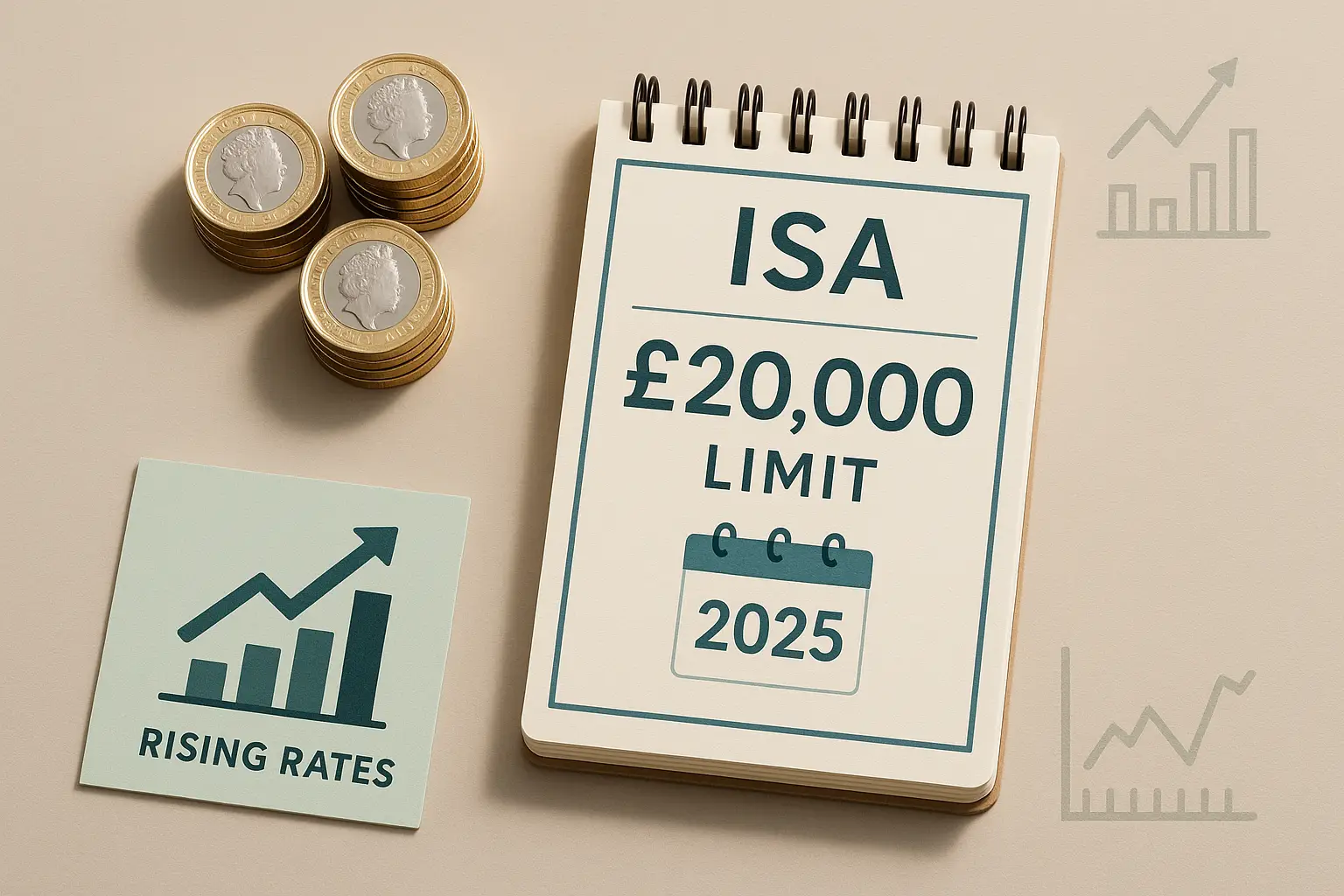
For short-term needs like emergencies, easy access wins; for long-term like retirement, fixed rate secures yields. Inflation reduces purchasing power, so aim for rates above 2% – both types can qualify in ISAs up to £20,000 tax-free annually. Higher earners should consider personal savings allowance (£1,000 basic rate taxpayers) to avoid tax on interest.
FSCS covers both up to £85,000. For more on basics, see our savings basics guide.
- Assess timeline: Under a year? Go easy access.
- Check inflation beat: Fixed may protect better long-term.
- Review tax: Use ISAs to maximise tax-free growth.
To dive deeper, read our easy access savings accounts explained article.
Best accounts and how to switch
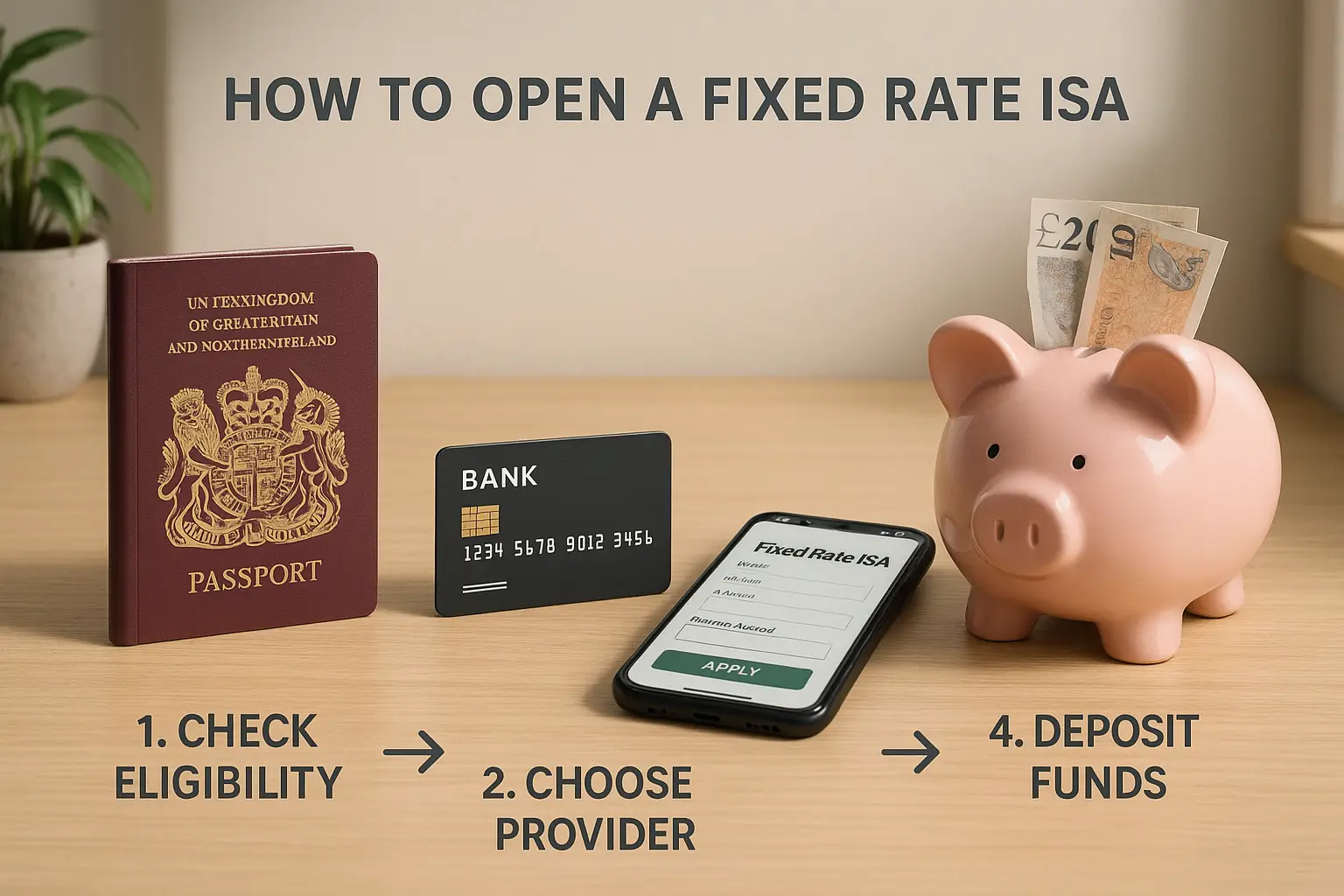
Top picks include Chase for easy access at 4.75% and Shawbrook for fixed at 4.55%, but compare via tools like MoneySavingExpert. To switch, check eligibility online, transfer via current account, and monitor for bonuses.
Steps:
1. Compare rates on sites like MoneySavingExpert’s best savings guide.
2. Open new account digitally.
3. Transfer funds – many providers handle closures.
Explore best easy access savings options. For rates, visit top easy access savings rates 2025. Learn selection in our how to choose easy access savings account piece.
Frequently asked questions
What is the difference between easy access and fixed rate savings?
Easy access savings accounts allow withdrawals at any time with variable interest rates that can change, ideal for flexibility. Fixed rate savings accounts lock funds for a fixed term with a guaranteed rate, offering stability but penalties for early access. The key difference lies in liquidity versus rate security; choose based on whether you prioritise immediate access or higher, predictable returns in 2025’s economy.
Are fixed rate savings better than easy access?
Fixed rate savings can be better if you don’t need the money soon and want to lock in current high rates amid potential Bank of England cuts. However, easy access suits those needing flexibility, especially if rates rise. Ultimately, fixed rates often yield more for long-term savers, but assess your risk tolerance and goals for the best fit in easy access savings vs fixed rate scenarios.
What are the best easy access savings rates in 2025?
In 2025, leading easy access rates hit 4.75% AER from providers like Chase, influenced by the 4.75% base rate. These variable rates fluctuate, so monitor changes via comparison sites. For optimal choice, factor in FSCS protection and minimum deposits; switching from low-rate accounts could boost returns significantly for UK savers.
How does inflation affect savings accounts?
Inflation erodes the real value of savings by increasing living costs faster than interest earns, making rates above the 2% UK inflation target essential. Both easy access and fixed rate accounts can outpace it in 2025, but fixed rates better shield long-term against rises. Savvy users pair high-yield accounts with ISAs to combat this, preserving purchasing power over time.
Can I withdraw money from a fixed rate account early?
Yes, but expect penalties like losing 90-150 days’ interest or a flat fee, reducing overall returns. Some accounts offer partial withdrawals with reduced rates, but full access often means closing early at a cost. In easy access savings vs fixed rate comparisons, this underscores why fixed suits committed savers only; always review terms before committing.
How do 2025 base rate changes affect these accounts?
Bank of England base rate adjustments, like the recent drop to 4.75%, directly lower easy access rates as they track it closely, potentially reducing yields quickly. Fixed rate accounts remain unaffected mid-term, protecting against cuts but missing gains if rates rise. For 2025 planning, time fixed locks around expected changes to maximise returns in volatile times.