
Understanding current UK savings rates
Current savings rates in the UK stand at competitive levels in October 2025, with top easy access options reaching 4.75% AER (annual equivalent rate, which shows the true return accounting for compounding interest). These rates are influenced by broader economic factors, helping savers beat inflation in some cases. However, 75% of accounts pay below the base rate, meaning many are losing real value if inflation remains at 3.8%.
Bank of England base rate impact
The Bank of England base rate, currently held at 4% following the September 2025 decision, directly shapes current savings interest rates UK-wide. Banks typically offer rates a fraction below this to cover their costs, so when the base rate stabilises or cuts, savings returns follow suit. The next Monetary Policy Committee meeting on November 6 could signal changes, as detailed on the Bank of England website.
How rates compare to inflation
With UK inflation at 3.8% in October 2025, the best current savings rates exceed this threshold, preserving purchasing power—for instance, 4.75% easy access beats inflation by over 0.95%. Yet, average accounts lag behind, eroding savings over time. Savers should target rates above inflation to maintain real growth, especially as forecasts suggest rising pressures.
Types of savings accounts
Savings accounts vary by access and commitment. Easy access allows withdrawals anytime with rates around 4-4.75%; fixed-rate locks funds for a term at 4-4.55%; regular savers cap deposits monthly but offer up to 7.5%. Each suits different needs, from liquidity to higher yields.
Best easy access savings rates
Top easy access current savings account interest rates hover at 4.75% AER, providing flexibility without penalties. Providers like Chase and Cynergy Bank lead, ideal for emergency funds. These beat many current accounts, which often pay under 1%.
Top providers and rates
Here’s a comparison of leading easy access options as of October 2025:
| Provider | Rate (AER) | Minimum Deposit | Access Terms |
|---|---|---|---|
| Chase UK | 4.75% | £0 | Instant access |
| Cynergy Bank | 4.70% | £1 | Instant access |
| Nationwide | 4.50% | £1 | Instant access |
| Santander | 4.20% | £500 | Instant access |
(Data sourced from MoneySavingExpert, October 2025.)
Pros and cons
- Pros: Full liquidity, no withdrawal fees, competitive current UK savings interest rates 2025.
- Cons: Rates may drop quickly with base rate cuts; lower than fixed options.
Eligibility and limits
Most require UK residency and a linked current account. Limits often cap at £85,000 for FSCS protection. No age restrictions typically, but some like NatWest offer bonuses for existing customers.
Tip: Check for introductory bonuses on easy access accounts to boost initial current savings account rates, but read the small print on how long they last.
Best fixed rate savings options
Fixed rate savings guarantee returns, with top current savings account interest rates at 4.55% for one year. They suit those who can commit funds, outperforming easy access amid stable rates.
1-year vs longer terms
One-year fixes average 4.5%, while two-year options hit 4.3%—shorter terms yield more now due to expected cuts. Longer locks protect against falls but tie up cash.
Current offers from major banks
Key fixed deals as of October 2025:
| Provider | Term | Rate (AER) | Minimum Deposit |
|---|---|---|---|
| HSBC | 1 year | 4.55% | £2,000 |
| Nationwide | 1 year | 4.50% | £1 |
| Santander | 2 years | 4.30% | £500 |
(From money.co.uk, accessed October 22, 2025.)
Lock-in considerations
No early withdrawals without penalties, often 90-180 days’ interest loss. Ideal if you foresee rate drops, but assess liquidity needs first.
High-yield and regular saver rates
Current high yield savings rates reach 4.75% for easy access, with regular savers up to 7.5% for disciplined depositors. These maximise returns but come with restrictions. For more on high yield savings accounts, see our guide.
Top high-interest accounts
Beyond basics, accounts from Chase offer 4.75%, edging out standard bank savings rates.
Regular savings bonuses
Nationwide and NatWest provide 7.5% on up to £200 monthly deposits for 12 months, per GB News (October 2025). Great for building habits, but miss a month and rates plummet.
Risks of limited access
Overfunding voids bonuses; no flexibility for emergencies. Balance with easy access for safety.
2025 savings rate predictions
Experts forecast base rate cuts to 3.75% by year-end, pulling current savings rates down to 3-4%. This creates urgency to lock in now.
Expected base rate changes
Four 0.25% reductions possible, starting November, as per Coventry Building Society analysis.
Factors influencing rates
Inflation trends and GDP growth drive decisions; persistent 3.8% inflation may slow cuts.
Tips for savers
- Switch to fixed if cuts loom.
- Use comparison sites regularly.
- Consider how to find high interest savings accounts amid changes.
How to choose and switch savings accounts
Prioritise AER above inflation and FSCS cover. Switching takes minutes online, boosting returns by 1-2%.
FSCS protection
Up to £85,000 per person per institution; check via FSCS site.
Tax-free options (ISAs)
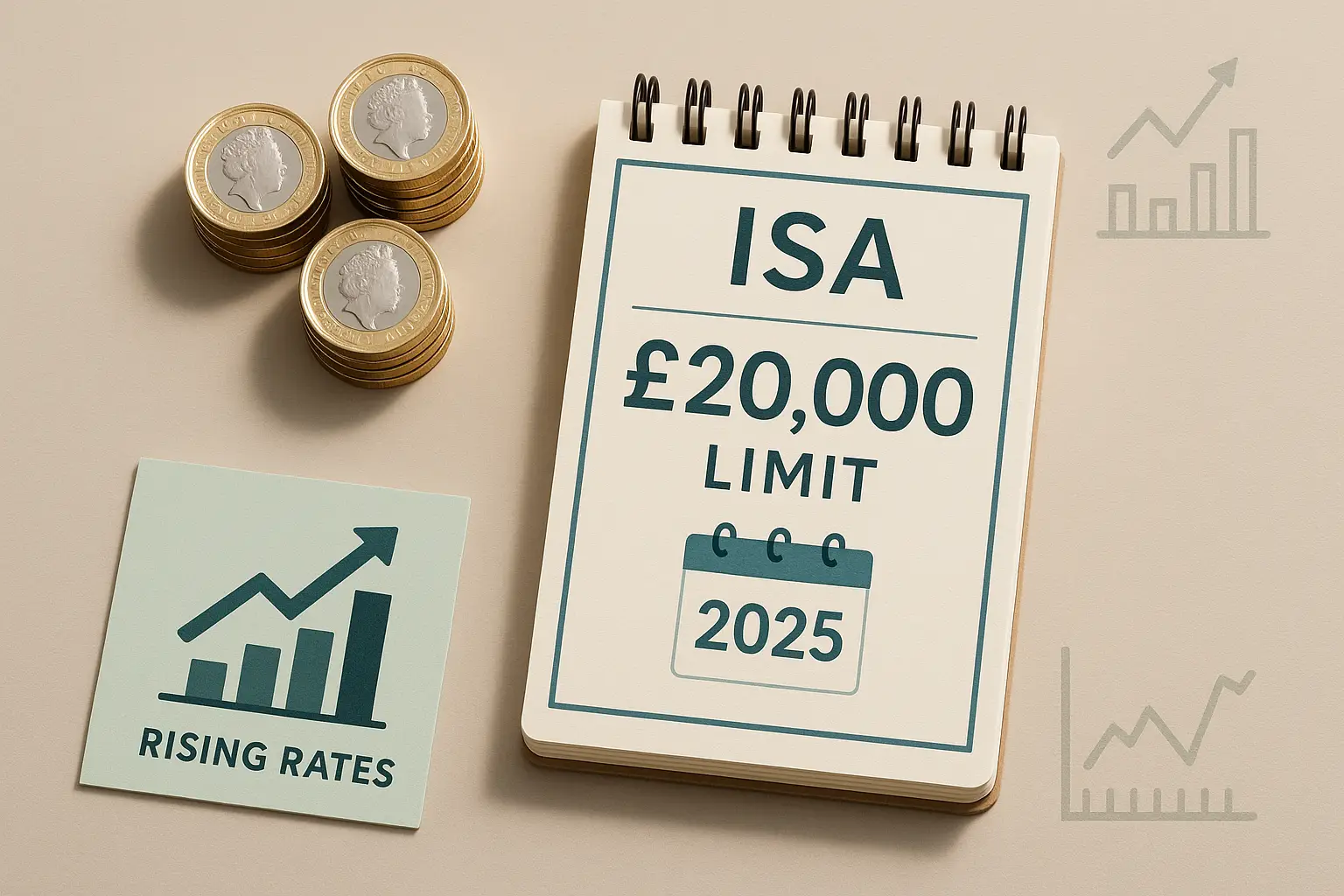
Cash ISAs shield interest up to £20,000 yearly, avoiding PSA tax on over £1,000 basic-rate interest.
Comparison tools
Use sites like MoneySavingExpert for updates. For comprehensive advice, explore our best savings rates guide.
Frequently asked questions
What is the best savings account interest rate right now?
The highest current savings interest rates UK stands at 4.75% AER for easy access from providers like Chase, as of October 2025. This outperforms inflation and suits flexible savers, but regular accounts reach 7.5% with deposit limits. Always verify latest via comparison sites, as rates fluctuate with base changes.
How do savings rates compare to inflation?
Top current savings rates exceed the 3.8% inflation rate, offering real gains—e.g., 4.75% nets 0.95% after inflation. However, 75% of accounts pay below 4%, eroding value over time. Savers should aim higher to protect wealth, monitoring CPI updates from the Office for National Statistics.
When will interest rates change in 2025?
The next Bank of England decision is November 6, 2025, with potential 0.25% cuts quarterly thereafter, possibly reaching 3.75% by December. This follows stabilisation at 4% in September. Economic data like wage growth will influence timing, so track announcements for savings impacts.
What is the current Bank of England base rate?
As of September 2025, the base rate is 4%, unchanged to curb inflation. It sets the benchmark for current bank savings rates, typically 0.5-1% lower. Savers benefit from this stability but prepare for downward pressure, per official Monetary Policy reports.
Are savings rates expected to rise or fall?
Predictions point to falls in late 2025, with base rate cuts dragging easy access to 3-3.5%. Fixed options may hold better short-term. Factors like global events could alter this; consult forecasts for strategies to lock in higher yields now.
How much can I save tax-free on interest?
Under the Personal Savings Allowance (PSA), basic-rate taxpayers earn £1,000 tax-free yearly, higher-rate £500, and additional-rate none. Beyond this, interest counts as income tax. ISAs bypass PSA limits up to £20,000 annually, maximising net returns—ideal for those with substantial savings.
What is AER and why does it matter?
AER (Annual Equivalent Rate) standardises interest comparison by including compounding effects, unlike gross rates. It reveals true earnings, e.g., 4% AER might compound to more than simple interest. Use it to select accounts fairly, ensuring apples-to-apples evaluations in a variable rate environment.
To maximise your returns, compare options today and switch if better rates await—your money deserves the best.