Booster seat reviews: the quick answer
The right booster seat depends on your child’s height and weight, your car and whether you want a high-back, backless or ISOFIX model. For many families, a high-back booster seat is the most versatile choice because it guides the three-point belt and provides back, head and side support. A backless booster can be suitable when the child meets its approval requirements and the adult belt fits correctly.
In the UK, children normally need an approved child car seat until they are 12 years old or 135 cm tall, whichever comes first, according to GOV.UK’s child car seat rules. Age helps when browsing, but the approved height or weight range for the individual seat determines whether it is suitable.
Top booster seats in the UK
The products below cover low-cost, high-back and ISOFIX choices sold by Halfords and Argos. The prices and product descriptions are the retailer listings used for this comparison.
Prices may change after publication, so use the linked retailer listing for the current price.
| Product |
Type |
Listed price |
Stated feature or use |
| Halfords Eland R129 Booster Seat |
R129 booster |
£14.99, reduced from £19.99 |
Low-cost Halfords option |
| Graco Logico L i-Size R129 Highback Booster |
High-back, R129 |
£39.99, reduced from £49.99 |
High-back booster from Halfords |
| Argos Cuggl R129 Standard Booster Car Seat |
R129 booster |
£15.00 |
Low-cost Argos option |
| Harmony Insight ISOFIX R129 Booster Car Seat |
ISOFIX, R129 |
£35.00, reduced from £90.00 |
Argos ISOFIX option |
| Joie i-Chapp FX R129 i-Size ISOFIX Car Booster Seat |
ISOFIX, R129 |
£32.00, reduced from £40.00 |
Argos i-Size ISOFIX option |
| Cuggl ISOFIX R129 High Back Booster Car Seat |
High-back, ISOFIX, R129 |
£65.00 |
High-back ISOFIX option from Argos |
| Graco Junior Maxi i-Size R129 Booster Car Seat |
R129 booster |
£40.00 |
Argos i-Size option |
For a basic low-cost purchase, the Halfords Eland and Argos Cuggl Standard are the least expensive options in this comparison. The Graco Logico L is the listed high-back choice from Halfords, while Argos provides several different price points for ISOFIX and high-back seats. The Harmony Insight and Joie i-Chapp FX are the lower-priced ISOFIX examples; the Cuggl High Back ISOFIX costs more and is specifically described as a high-back model.
High-back booster seat or backless booster seat?
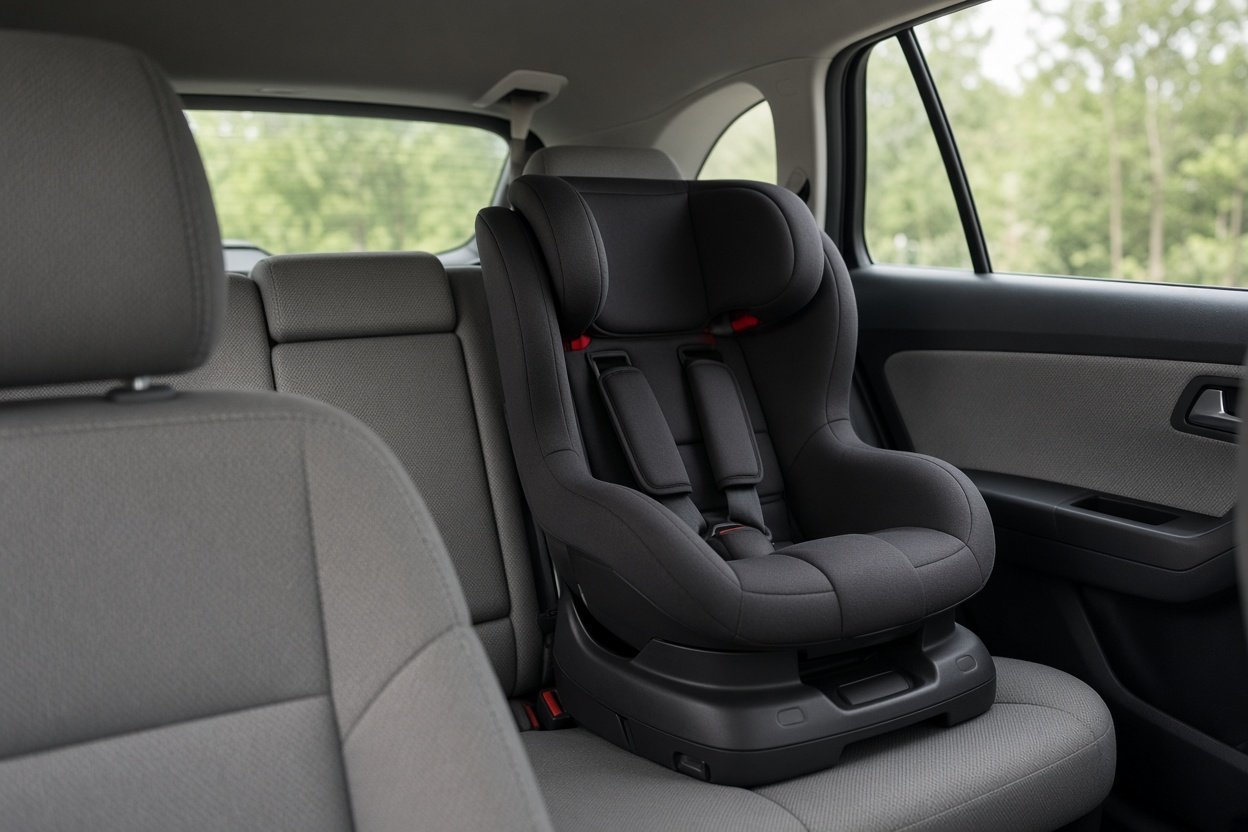
A high-back booster provides a back, head support and side wings, while a backless booster raises the child without that surrounding structure. The high-back design is the preferred direction when the child needs more support or the belt does not naturally sit in the right position.
A high-back booster raises the child so the car’s three-point belt crosses the correct parts of the body. The lap section should sit across the pelvis, while the diagonal section should cross the chest and shoulder rather than the stomach or neck. RoSPA’s Child Car Seats guidance recommends high-backed boosters over backless cushions because the back, head support and side wings provide better protection in a side collision. The guidance is available in its information on high-back boosters and booster cushions.
A backless booster is smaller and easier to move between cars, but it does not provide the same head and side structure. New backless booster seats or cushions cannot be approved for children under 125 cm or under 22 kg under the rules introduced on 9 February 2017. Older approved cushions are still allowed according to the manufacturer’s instructions.
A child’s age alone is not enough to select a backless model. The child must meet the seat’s height and weight limits, and the three-point belt must sit across the pelvis, chest and shoulder.
Booster seat ISOFIX: what it does
ISOFIX attaches the booster seat to the car’s ISOFIX anchorage points, while the car’s three-point belt normally restrains the child in a high-back booster. ISOFIX therefore does not replace the belt.
This makes ISOFIX different from a harnessed child seat: the anchorage connection is between the car and the seat, but the belt remains the normal restraint for the child in a high-back booster. ISOFIX can also keep the booster attached to its anchorage points when it is not occupied.
ISOFIX is useful for families who want a booster that connects directly to approved anchorage points or who regularly use more than one approved seating position. It does not change the child’s required height, weight or belt fit.
Booster seat age and height requirements
There is no single booster seat age that applies to every child or every model. Many high-back boosters start at approximately 4 years, but the child must have outgrown the previous seat and meet the new seat’s approved height or weight range.
| Approval or category |
Stated range |
What it means when choosing |
| R129/i-Size phase 2 booster |
Normally 100–135 cm; some seats up to 150 cm |
The specific seat’s height range applies |
| R44 Group 2 high-back booster |
15–25 kg; approximately 4–6 years |
Weight determines the approved range |
| R44 Group 2/3 high-back booster |
15–36 kg; approximately 4–11 years |
Use only within the stated weight range |
| New backless booster or cushion |
Not approved below 125 cm or 22 kg |
Both height and weight matter |
Child Car Seats’ booster seat guidance states that R44 Group 2 high-back boosters cover 15–25 kg, approximately 4–6 years, while Group 2/3 high-back boosters cover 15–36 kg, approximately 4–11 years. R129 seats are classified by height rather than the older group system.
That is why searches such as “booster seat age 3”, “booster seat age 4” and “booster seat age 5” need careful interpretation. A four-year-old may meet the range for some high-back boosters, but age alone does not establish that a backless booster is appropriate. The approval label and instructions for the exact product provide the relevant limit.
Booster seat law UK: the rules parents need
Under UK rules, a child normally uses an approved car seat until reaching 12 years old or 135 cm, whichever comes first. The seat must be suitable for the child’s size and correctly fitted.
GOV.UK identifies 15–25 kg as Group 2, where both high-backed booster seats and booster cushions can occur, and 22–36 kg as Group 3, where both types can also occur. The approval category is therefore more useful than a simple age label when comparing products.
Backless booster seats are not generally illegal in the UK. New models cannot be approved for children below 125 cm or 22 kg, while older approved models may continue to be used according to their instructions.
Halfords and Argos booster seat prices
Halfords and Argos offer different combinations of R129, high-back and ISOFIX boosters. Halfords lists the Eland and Graco Logico L examples above, while Argos lists standard, high-back and ISOFIX products at several price points.
| Retailer |
Examples and listed prices |
Comparison point |
| Halfords |
Halfords Eland R129 Booster: £14.99, reduced from £19.99; Graco Logico L: £39.99, reduced from £49.99 |
Entry-level and high-back options |
| Argos |
Cuggl Standard: £15.00; Joie i-Chapp FX ISOFIX: £32.00, reduced from £40.00; Harmony Insight ISOFIX: £35.00, reduced from £90.00; Cuggl High Back ISOFIX: £65.00 |
Several R129, ISOFIX and high-back price points |
Argos also lists the Cuggl ISOFIX R129 Car Booster Seat at £30.00 and the Graco Junior Maxi i-Size R129 Booster Car Seat at £40.00. These give shoppers more alternatives between the standard Cuggl price and the Cuggl high-back ISOFIX price.
Booster seat for table: do not confuse it with a car seat
A booster seat for a table is a feeding product, not a child car seat, and must never be used in a vehicle. It raises a child at the dining table and follows a different safety purpose and design.
The Argos feeding category includes products such as Bright Starts Pop N Sit, Bright Starts Stitch My Spot and the Ingenuity Simplicity Feeding Booster. They are separate from the Argos car booster category.
A search for “Argos booster seat for table” can therefore return feeding products, while “Argos car booster seat” refers to vehicle restraints. The two categories must not be substituted for one another.
How to choose a booster seat
Before buying, compare the child’s height and weight with the product’s approval range. For an ISOFIX model, compare the car and seat compatibility information and the intended seating position. In every booster, the lap belt should sit over the pelvis and the diagonal belt across the chest and shoulder. Use the manufacturer’s fitting instructions.
High-back models suit children who need head, side or belt-positioning support. Backless models are smaller, but only suit a child who meets the model’s limits and can sit with the adult belt correctly positioned. A lower price does not make a model unsuitable, and a higher price does not remove the need for the correct fit and approval.
For a direct product comparison, the Halfords Eland and Argos Cuggl Standard are the entry-level choices listed here. The Graco Logico L adds a high-back format at Halfords, while Argos offers the Harmony Insight and Joie i-Chapp FX for ISOFIX buyers. The Cuggl High Back ISOFIX combines the high-back format with ISOFIX, and the Graco Junior Maxi provides another R129 option at Argos.
Frequently asked questions
What age can a child just use a booster seat?
Many high-back booster seats are intended from approximately 4 years, but there is no universal legal starting age. The child must meet the individual seat’s approved height or weight range. R44 Group 2 starts at 15 kg, while R129 booster seats are commonly based on height, often from 100 cm.
What age should your child go in a booster seat?
A child should move to a booster when they have outgrown the previous approved seat and meet the next seat’s limits. Age provides only a rough guide; height, weight, belt fit and the manufacturer’s instructions decide whether the move is suitable.
Can a 4 year old use a backless booster?
Age four alone is not enough to answer yes. New backless boosters cannot be approved for children under 125 cm or under 22 kg. The child must meet both measurements and the specific product approval. A high-back booster is generally the safer choice where the child needs head, back or side support.
Are backless booster seats illegal in the UK?
No. Backless booster seats are not generally illegal in the UK. New models have minimum approval limits of 125 cm and 22 kg, while older approved cushions can continue to be used according to their instructions. The seat must still be approved, suitable for the child and correctly used with the three-point belt.